
Why the diagnosis is not enough
If I had a dollar for every time I was asked, “What’s the remedy for ______?” I could fund a free classical homeopathy clinic for the entire community. Oh, what dreams are made of.
It is probably the most common question a homeopath receives:
What’s the remedy for anxiety? Ear infections? Migraines? Bedwetting? Recurring strep? Eczema? Asthma? Molluscum?
The truth is, that question has no single answer.
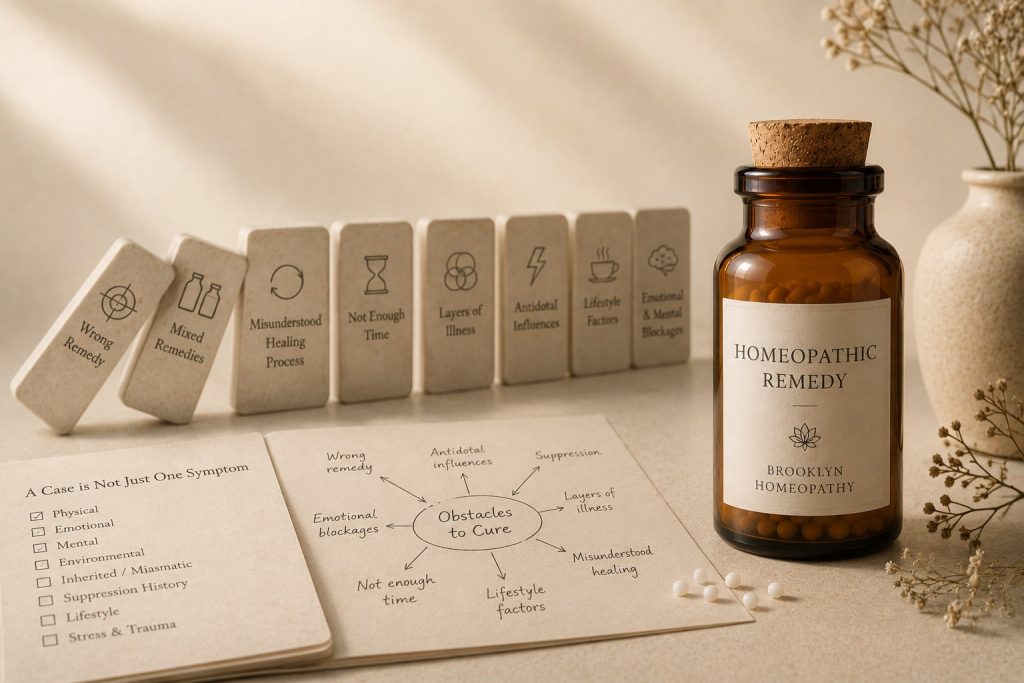
Classical homeopathy does not prescribe one standard remedy for each diagnosis. It treats the person experiencing the illness. The diagnosis matters, but it does not tell us nearly enough to determine the remedy.
The Same Diagnosis Does Not Mean the Same Remedy
Earlier this year, I treated three toddlers with ear infections within two days. One needed Belladonna, one needed Lycopodium, and the third needed Chamomilla.
I did not determine that from the words ear infection. Each case required nearly an hour of careful questioning. I needed to understand the exact nature of the pain, how the child was experiencing the illness, what made the symptoms better or worse, what had preceded the infection, what other symptoms were present, and many other details unique to that child.
Had I simply recommended a popular “ear infection remedy” to all three, at least two of those children would have received the wrong remedy.
In classical homeopathy, accuracy is everything. We do not guess, casually try remedies, or cycle through a list until something seems to work. Only the remedy that accurately corresponds to the individual’s complete state can stimulate genuine healing. Proper case-taking is therefore not an optional extra. It is the foundation of effective treatment.
This Applies to Every “What’s the Remedy For __?” Question
There are hundreds of homeopathic remedies associated with anxiety. But the child who becomes terrified of the dark after a fright is not experiencing the same state as the child who panics whenever his mother leaves the room or the one who develops stomachaches before school.
A headache may be pounding or pressing, triggered by stress or sun exposure, improved by pressure or aggravated by movement. Eczema may burn or itch, improve with cold or warm applications, and appear alongside completely different physical and emotional symptoms.
These details are not side notes. They are what distinguish one remedy from another.
Why Proper Case-Taking Matters
Case-taking is the process through which a classical homeopath studies the person’s complete pattern, not merely the most obvious symptom.
We explore when and how the problem began, what improves or aggravates it, how the individual is experiencing the illness (i.e. colder than usual, more irritable, suddenly needs company etc.) and which other physical symptoms accompany it. In chronic cases, we also explore emotional and behavioral patterns, past illnesses, previous treatments, and family history.
A consultation for chronic illness typically requires 90+ minutes. An acute illness may need about 45-60 minutes, and the three toddlers with ear infections demonstrate that even determining the remedy for acute illness requires careful differentiation.
Why I Cannot Name a Remedy in Passing
When someone asks me at a wedding, in a WhatsApp message, or during school pickup, “What should I give for my child’s ear infection?” or “What’s the remedy for eczema?” it may sound like a quick question.
But selecting a remedy requires taking the case, analyzing the symptoms, asking lots of questions, clarifying, and then differentiating among many possible remedies. Without that process, naming a remedy would simply be guessing. A thoughtful and accurate remedy recommendation is not a quick tip. It is the result of careful, professional case-taking.
So the next time you wonder, “What’s the remedy for this?” remember that finding the answer begins with a proper consultation.
That is where healing begins.
Important: Homeopathic care should not delay appropriate medical evaluation or treatment. New, severe, persistent, or rapidly worsening symptoms and any urgent concerns require prompt medical attention.