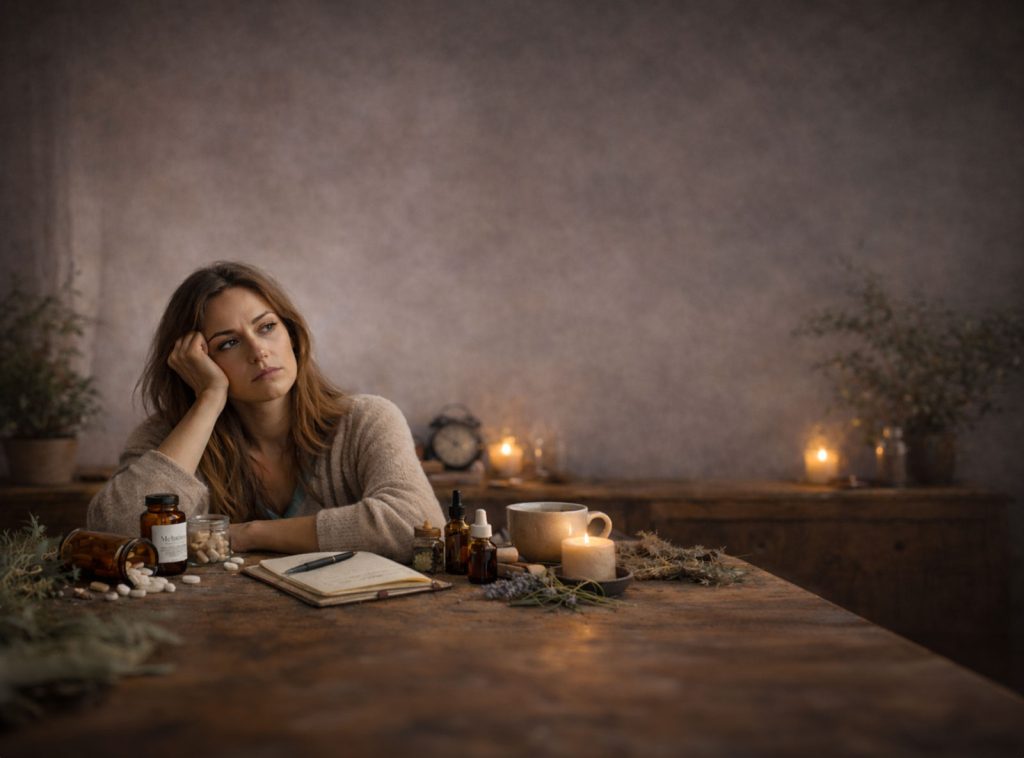

I wrote this Letter to the Editor in response to C. Weingarten’s “Finding Myself in the Shadow of Survival: My Experience Through PMADs,” published in Issue #20 of Embrace Magazine. My response was published in Issue #21, Sept. 2026.
I was pained reading C. Weingarten’s account of her medical experience during pregnancy and postpartum. The layers of her suffering, the medical dismissal, the fear, and the slow unraveling of her sense of self are written with tremendous courage and vulnerability.
What saddened me most was not only the suffering itself, but a gap I notice in how our community tends to respond to postpartum struggles. The support offered is real and caring. And yet so much of the framework surrounding postpartum suffering centers around psychiatric labels, coping tools, therapy, peer support, and helping women endure rather than truly heal. These are not the same thing.
We have become very good at naming suffering, validating suffering, and helping women survive it. But we speak far less about what true and rapid restoration of health might actually look like. I write not to challenge anything the author shared, but to gently add a voice I wish more women knew about. Classical homeopathy is a form of holistic medicine that listens to the whole person. Not the diagnosis, not merely the checklist of physical symptoms, but the full human experience: what triggers the fears, the particular way anxiety takes hold, the intensity of day to day survival.
A Classical Homeopath patiently listens for over an hour and seeks to understand the whole person, the underlying imbalance and the resulting pattern of suffering being expressed through mind and body. A remedy like Arsenicum album, for example, addresses states of intense fear of death, overwhelming anxiety, hypervigilance, anguish, and a desperate need for safety and control that no reassurance can satisfy. It is one of many remedies that works to restore health at the root, rather than help someone manage surface symptoms.
There are hundreds of remedies in the classical homeopathic repertoire because no two women experience postpartum suffering in exactly the same way. One woman may spiral into terror and hypervigilance, another into despair, detachment, irritability, weepiness, anxiety, rage, or profound exhaustion. Classical homeopathy seeks to match the remedy precisely to the individual pattern being expressed, which is why the correct remedy can bring about profound healing with remarkable depth and speed.
I only wish more women knew these options existed before years of suffering become normalized as something to painfully plow through. Community organizations, doulas, therapists, and friends who support postpartum women can offer something profound simply by knowing these options exist and passing that knowledge on. Mothers deserve compassion and support. But they also deserve to know that genuine, rapid healing, not just survival, is possible.